Decking around established trees
The tree was there first. How to build a deck that does not girdle roots, drown a trunk, or turn a living elm into a post.
By James Calder, Landscape writer · 30 August 2025 · Updated 11 February 2026
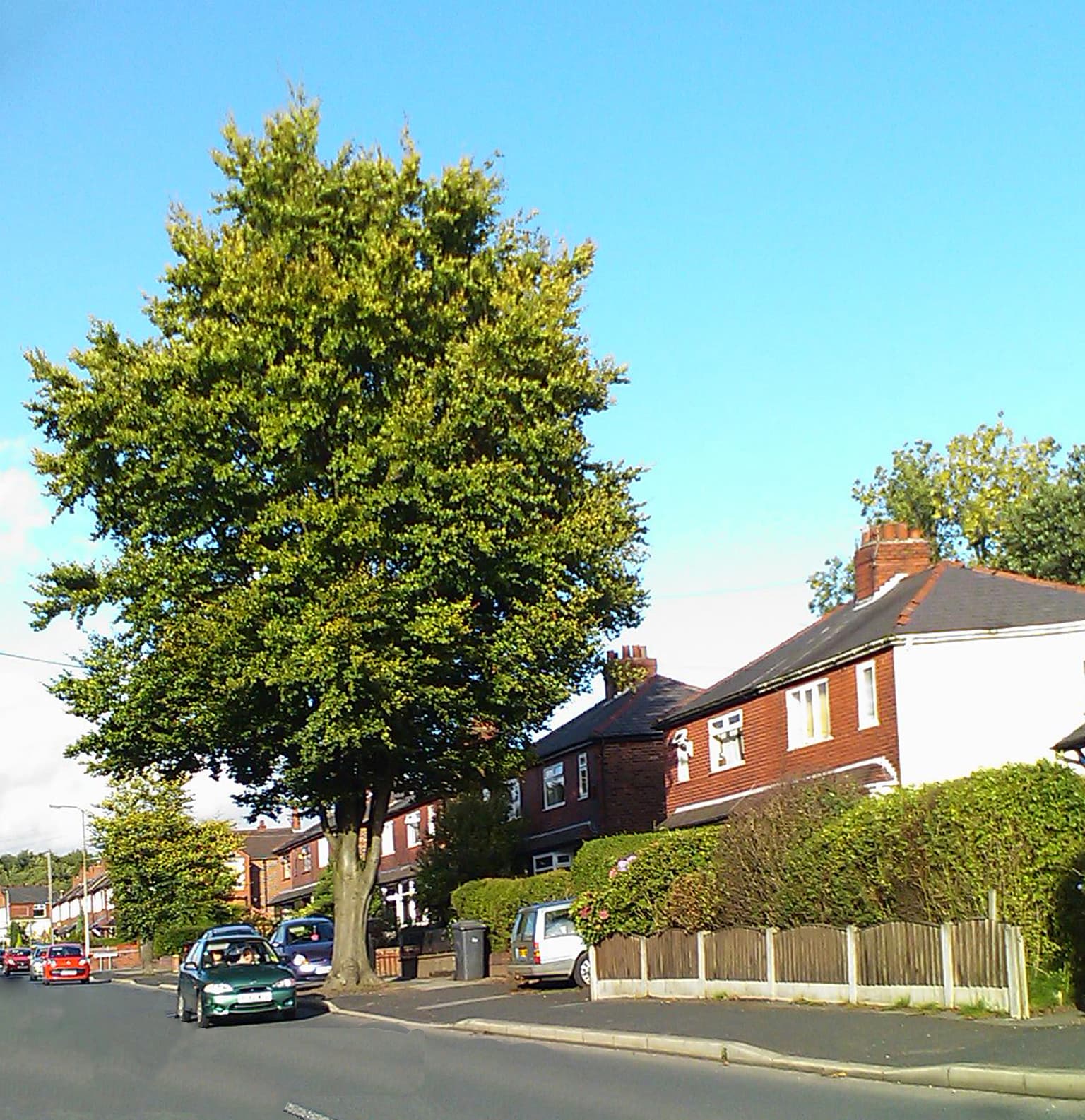
Photograph: Ian Greig. A well established tree - geograph.org.uk - 2066523.jpg. CC BY-SA 2.0. Source on Wikimedia Commons. See all image credits.

Melbourne gardens are full of trees that predate the current owners’ taste in timber: lemon-scented gums, liquidambars, olives, the odd elm, a jacaranda that drops a purple carpet onto whatever you build. The decent response is to treat the tree as a client. The cheap response is to bury the roots in a concrete pad and be surprised when the tree or the deck dies.
A deck can be a good way to occupy the ground under a tree without a lawn that will not grow. It can also be a slow strangling.
Find the roots before you find the nail gun
An arborist will talk about a structural root zone and a tree protection zone. Those numbers exist so you do not guess. Exploratory digging by hand or air, not a trench for a continuous footing, is how you see what you are dealing with.
Piers or screw piles in gaps between major roots beat a strip footing that severs them. A floating frame that steps over a root is better than a root that is “trimmed flush” because it was inconvenient. Large roots are not optional extras. They are the tree.
On a sloping block the temptation is to cut a pad. Cutting on the uphill side of a tree can be fatal. Change the deck level instead of changing the grade if you can.
The hole in the deck is a designed thing
Leave a collar. The trunk will grow. A square that fits today will be tight in twelve years. Use a circle or a polygon with room, and detail the edge so people do not step into it at night. A bench around the opening is a way to make the gap feel intentional.
Do not pile soil in the opening to “neaten” the flare. Do not wrap the trunk in lead or rubber and call it flashing. Rain should still reach some of the root plate. A fully sealed deck over the entire TPZ is a drought machine. Gaps, permeable ground at the edge, and watering in the first summers after construction are part of the job.
Leaf litter will collect in the collar. That is a cleaning task, not a reason to concrete the hole.
Species of tree, species of timber
A deciduous tree will stain and feed mould. Design for winter cleaning. A eucalypt will drop branches; do not put a glass table in the drop line and then sue the sky. Fruit trees will ferment on the boards — lovely bees, slick surface.
The wearing surface can be hardwood or composite. Tannin plus leaf tannin is a lot of colour on pale stone nearby. If the tree is the point, a quieter board — silvered spotted gum, a mid composite — lets the canopy win.
Bushfire sites add a cruel twist: the tree may be the risk as well as the amenity. Vegetation management and the deck detail have to be read together.
Permission and the sentimental client
Some trees are protected by council overlays. Some are the reason someone bought the house. Do not discover either fact after the first pier goes in. A planning overlay can make the tree more important than the deck. Good.
If the tree is dying, be honest. Building a jewel box around a dead gum is a future removal through a finished floor. Pay for the assessment first.
A deck that lets a tree stand is usually more beautiful than a deck that replaces it with a pot. Draw the trunk on the plan as a circle that grows. Then build around the future, not the photograph.
Construction period is when the damage happens
Most tree deaths attributed to “the deck” actually happened in the two weeks of excavation. A bobcat does not read a TPZ. Fence the zone. Hand-dig the piers. Do not store the pack of merbau on the root plate “just for the weekend”. Do not let the skip sit on the flare.
Water the tree through the job if you have cut into its summer routine. A stressed eucalypt drops limbs. A stressed elm tells you later.
Aftercare and the first two summers
Watch for dieback on the side you built. Watch for fungus at the collar if you have created a moist, dark well. Keep the opening free of potting mix someone thought would look tidy. If you added piers, do not then run a trench for a garden light through the remaining roots.
A deck under a tree will never be the cleanest deck in the street. That is the bargain. You get shade and a living ceiling. You scoop more gaps. You do not use a high-pressure washer against the trunk.
If the arborist said the tree was a poor specimen, believe them before you spend on a custom octagon. Build the deck where the garden can take it. Plant a new tree in a place a future deck will not have to negotiate. Melbourne has room for both — just not always in the same hole.
Utilities, irrigation and the other things in the ground
Old gardens hide irrigation lines, old septic ghosts and a power feed to a shed. Map them before the first pier. Cutting a drip line and leaving it to wet a joist all summer is a classic own-goal.
If you irrigate the tree after the deck is built, do it at the drip line you still have, not in the collar where water sits against bark. Bark that stays wet invites decay.
A tree and a deck can be a long marriage. The ceremony is the first careful hole.
Roots, law and the tree you cannot touch
Some Melbourne trees are on a register. Some are in a Significant Landscape Overlay. Some are simply the reason the house sold. All three can stop a deck in its current shape. Check before you sketch an octagon.
If the tree is protected, the arborist’s report is not optional colour. It is the document the planner will read. Design the piers to it.
If the tree is not protected and is the wrong plant — a messy, failing, badly sited thing — it can still be kinder to remove it properly and plant something that will live with a deck, rather than to build a shrine around a decline.
The sentimental client and the lawful tree are different briefs. Name which one you have.
Questions we are asked
- Can I build a deck right up to a tree trunk?
- You can get close with a framed opening that allows growth and air. You should not bury the root flare in soil or wrap the trunk in flashing. Trees thicken. Decks do not.
- Will a deck kill the tree?
- It can, if excavation cuts major roots, if the surface seals the soil, or if fill is piled against the trunk. A well-designed floating deck with pier foundations outside the critical root zone is often tolerated. An arborist should say so on your particular tree.
Canonical URL: https://deckingmelbourne.com.au/articles/decking-around-established-trees