How to oil a hardwood deck in Melbourne weather
A practical calendar for washing, drying and oiling merbau and spotted gum when the city is doing four seasons in a week.
By Priya Menon, Materials writer · 5 March 2025 · Updated 8 April 2026
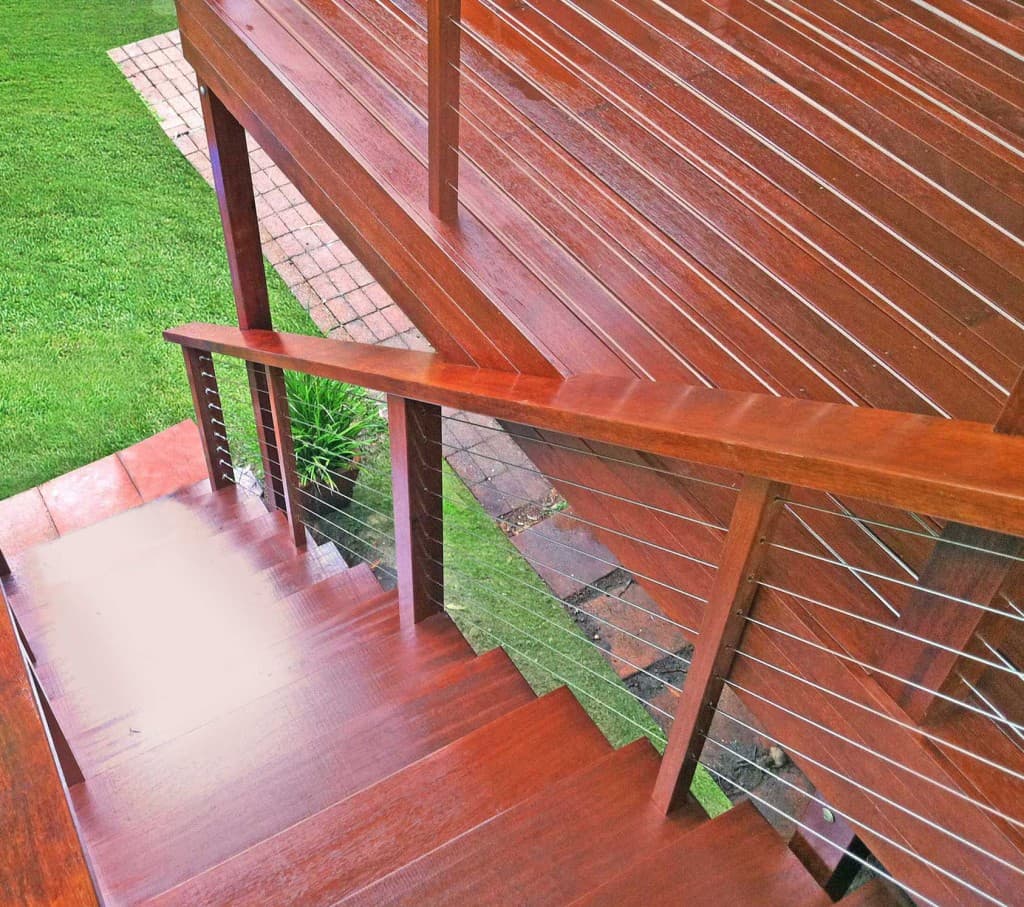
Photograph: Deckrevive. Deck oiling Brisbane.jpg. CC BY-SA 4.0. Source on Wikimedia Commons. See all image credits.

Oiling is not a personality. It is a sequence: clean, dry, coat, wipe, wait. Melbourne punishes people who skip the dry. It also punishes people who oil at 2 pm in a February north wind because the weekend was free.
If you have chosen silvering, this article is not your ritual — washing is. If you want the honey of new merbau or the depth of spotted gum, oil is the contract.
Pick a window, not a date
You want a few days without rain, a board that is dry to the core of the face, and a temperature that lets oil penetrate before it skins. In Melbourne that is often a stretch in November or March. April can be perfect. A random Saturday in January can be a disaster.
Test dryness with more than a glance. If the south side still looks dark after a “dry” week, wait. Oil on damp timber turns milky or sits as a slime.
Avoid coating in direct, harsh western sun. Work a shaded face, or start early. If the timber is hot to touch, the oil will gum.
Clean as if the oil will show everything
It will. Mould, sunscreen, barbecue fat and last year’s failed coat all sit under a new oil and look richer. Sweep. Apply a timber cleaner or a deck wash that suits hardwood — not household bleach as a habit, not a close-range high-pressure blaster that raises the grain into felt.
Rinse until the water runs clean. Let it dry. If the boards are grey and you want colour, a timber brightener (usually oxalic) can even the tone. Wear the gloves the label wants. Neutralise and rinse as directed.
If the deck is black after winter, read mould first. Oil does not kill that film; it varnishes it.
Choose an oil that matches the board
Penetrating deck oils for hardwood are the default. Some are tinted, which helps UV. Some are almost clear, which shows every stain. Merbau is oily already; a thin coat, wiped, is better than a second coat that never dries. Spotted gum will take a more even drink.
Stay away from cheap film-forming “deck paints” if you want a timber face you can recoat without a sander. If you have inherited a film, you are in restoration, not a maintenance oil.
One brand, one system. Mixing a leftover Danish oil with a hardware deck oil is how you get fish-eyes.
Apply like a painter who knows it will be walked on
Cut in edges. Work two or three boards along their length so you keep a wet edge. Wipe excess. Puddles in the grooves become shiny stripes that stay tacky and hold grit.
Feather the south side; it often needs less than the cooked north face. End grain at stairs drinks — coat it, but do not build a drip.
Keep people and pets off until the oil is no longer transferring. That may be overnight. It may be longer in a damp week. Put a note on the door. A child-shaped print in merbau oil is a long-lived artwork.
Aftercare
You will not oil every month. You will wash. You will move the pot that sat in one place all summer and left a pale rectangle. You will not put a plastic mat down “to protect the oil”; you will stain a pale rectangle of a different kind.
Re-oil when the timber looks dry and thirsty, not when a calendar app nags. A north-facing deck in Altona may want a yearly coat. A shaded courtyard may want one every second year and a wash every spring.
If you hate the ritual, change the specification next time — composite or a planned silver — rather than doing a bad oil forever. A well-oiled hardwood deck in Melbourne light is still one of the best floors we have. It just does not happen on a wet Sunday in July.
Tools, rags and the fire you do not mean to start
Oil rags can heat and burn. Lay them flat to dry outside or soak them in water in a metal tin. This is not folklore. It is how sheds go missing.
Use a brush or a pad you can wash. Keep a tin of the same oil for the stair nosing you will scuff in six months. Note the batch if you are fussy about colour; merbau will hide small differences, a pale hardwood will not.
When oil will not save you
Grey, fuzzy, mouldy, wet, peeling — oil is not the next step. Clean or restore first. If the board is cupped into a boat, oil will make a shiny boat. If the frame is soft, oil is perfume.
A good oiling day in Melbourne is slightly cool, slightly boring, and followed by a night you do not walk on the floor. Book that day like you would book the carpenter. The timber will look like you meant it.
Shared decks, rentals and the person who will not oil
If three households share a courtyard deck, write the ritual or choose silver. Oil left to “whoever remembers” becomes a blotch map of good intentions.
For a rental, silver plus a cleaner in the cupboard is kinder than a landlord who emails about oil twice a year and never books a day.
The best oil job is slightly thin, well wiped, and done on a dry, boring day. Everything else is folklore.
Colour expectations, merbau and the first six weeks
New merbau will shed tannin onto stone and will look uneven as some boards drink more than others. That is not a failed oil. Wait. Wash the stone. Do not pile on a second heavy coat to “even it out” in week one.
Spotted gum will show lap marks if you oil in patches in the sun. Keep a wet edge. Work with a partner on a big plane.
If you hate the first result, do not immediately strip. Live with it through a month of weather. Many “failures” are just wet weekends and impatience.
Oil is slow architecture. Give it the calendar it asked for.
Questions we are asked
- What month should I oil a deck in Melbourne?
- Late spring and early autumn are the usual windows — dry boards, mild days, no 35-degree northerly. February heat and July damp are the two ways to waste a tin.
- Can I oil without sanding?
- If the old oil is worn and the timber is clean, yes. If there is a film, a peeling stain, or grey fibres standing up, you need a clean and usually a light sand or a chemical brightener first.
Canonical URL: https://deckingmelbourne.com.au/articles/oiling-hardwood-deck-melbourne