Cypress pine vs treated pine for a Melbourne deck
Not every deck needs hardwood. Cypress and treated pine still build honest platforms in Victoria if you understand durability, chemicals, and what “budget” actually buys.
By Priya Menon, Materials writer · 2 April 2025 · Updated 9 February 2026
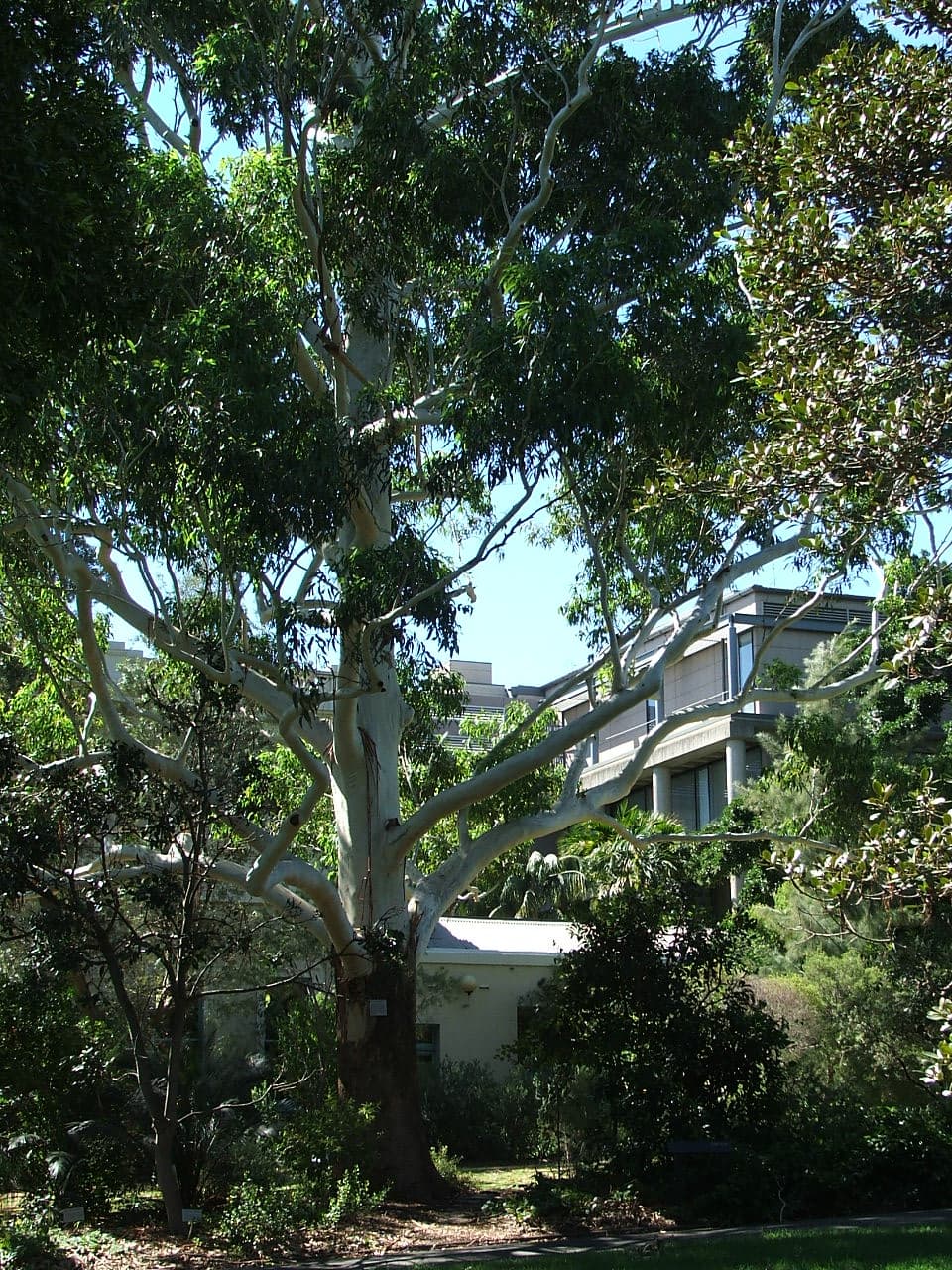
Photograph: Thajsko. Timber tree - Eucalyptus grandis - panoramio.jpg. CC BY 3.0. Source on Wikimedia Commons. See all image credits.

Hardwood has better press. Most of Melbourne’s actual decks, especially the ones hiding behind a paling fence in Reservoir or Dandenong, are pine of one kind or another. That is not a failure of taste. It is a failure of the idea that every outdoor floor must look like a resort. Cypress pine and treated pine are different materials that get lumped together because they are cheaper than spotted gum. They should not be substituted for each other without a look at durability class, treatment, and how the deck meets the ground.
Treated pine is a system, not a colour
“Treated pine” on a hardware rack means radiata pine that has been impregnated with a preservative to a hazard class. For decking boards above ground, you want H3. For posts in the ground, H4 or H5 depending on the soil and the engineer. Using H3 posts as in-ground footings is how a cheap deck becomes a leaning deck.
The green tint people remember is less common than it was. Modern copper azole and alkaline copper quaternary treatments can leave boards a brownish olive that oils to a honey colour. The chemical is there to stop fungi and insects eating the sapwood. It does not stop water moving, and it does not stop the board cupping if you lay it wet in a January heat.
Treated pine decking is usually 22 mm, sometimes 19 mm. It is softer than hardwood. Heels dent it. Barbecue coals mark it. A hidden-clip system designed for hardwood will crush it. Top-fix with proper decking screws, two per joist, and accept that you will see the heads. In ten years you will be glad you can back a screw out and replace one board.
The frame can be treated pine even when the wearing surface is hardwood or composite. That is normal and sensible. Just keep soil and garden mulch off the bearers, and do not wrap the substructure in plastic “for waterproofing”. Pine needs to dry. Read substructure, joists and footings before you bury a bargain.
Cypress pine, and why people still ask for it
White cypress (Callitris glaucophylla) is an Australian softwood with natural durability in the heartwood. It smells like an old church. It is lighter in colour than merbau and it weathers to a pale grey that many people prefer to the khaki of tired treated pine. Because it is not chemically treated, it is the pine that turns up in conversations about kitchen gardens, chicken runs, and households that do not want copper near a sandpit.
The catch is grade and sapwood. Cypress with a lot of sapwood will not last like the heartwood stories suggest. Ask for decking-grade, mostly heartwood, and be ready to reject wane and large loose knots. Cypress is also not as straight as factory-treated radiata. A good fixer will spend time selecting and crowning boards. A bad fixer will staple a banana to your joists and call it character.
Structurally, cypress is still a softwood. Spans follow the same conservative tables as other pines. Do not let a salesperson tell you it “spans like hardwood” because it is native. It does not.
Wet winters, oil, and the look of year seven
Both pines go grey. Treated pine goes a dirtier grey if it is never cleaned, because the surface fuzzes and holds pollution. Cypress silvers more evenly if the sun can reach it. Under a dense pergola both grow mould. A penetrating oil or a stain made for pine will extend the look and shed some water; it will not turn pine into ironbark.
Oil treated pine only when it is dry. If you coat a board that is still bleeding treatment or rain, you trap a mess. Cypress takes oil well and smells wonderful for a week. In both cases, the south side of a Melbourne deck will need more washing than the north. That is climate, not brand.
If you want to stop oiling, pine is the wrong wearing surface. Look at composite in Victoria or at leaving a hardwood to silver. Pine that is left raw and unwashed becomes a slip hazard faster than people expect.
Money, repairs and the honest use-case
A treated-pine deck, simply built, is still the cheapest way to get a safe outdoor floor on a level suburban block. In 2026, supply-and-install prices in Melbourne can sit well under a hardwood job of the same size, which is why rentals and first decks still use it. Budget for replacement boards, not for immortality. Pine is easy to repair; that is a feature.
Cypress sits in the middle: more than treated pine, less than spotted gum, with a look that reads as “considered” rather than “hardware special”. It is a good choice for a small courtyard deck where you will see the timber up close and you do not want a chemical story.
Neither pine belongs as the only material on a bushfire-prone site without a proper BAL assessment. Neither pine belongs in permanent ground contact unless the hazard class says so. And neither pine will make a flat, undrained lid over a wet room safe — that is a membrane problem, not a species problem.
If you can spend more and you want the deck to be the architecture, read merbau versus spotted gum. If you are building a platform for a trampoline, a Hills hoist and a dog, treated pine done properly is not a compromise. It is a specification.
Fasteners, oils and the feel underfoot
Pine dents. That is not a moral failing. It is why you do not wear stiletto heels on a treated-pine entertaining deck and then blame the species. If the brief is a dance floor, you wanted hardwood. If the brief is a family platform with a dog, pine’s dent is a record of use.
Use screws made for treated pine if that is your frame; some older coatings ate cheap metal. On the wearing surface, stainless still wins near the bay. Hidden clips in pine crush. Top-fix and move on.
Oil is optional for look and not a substitute for the preservative already in H3 boards. Cypress likes oil and will smell like a camp. Do not oil either pine in a wet week. The fuzz will hold the oil like a sponge and stay tacky.
Where pine is the wrong conversation
A waterproof lid over a living room. A BAL-29 stair. A pool coping you want to look like a resort for twenty years without board replacement. A client who says “maintenance-free” and means it. In those jobs, pine can still be the frame and should not be the story.
For a first deck on a level block, with a skip, a sunny weekend and a builder who will set H4 in the ground, pine is how Melbourne learned to eat outside. Specify it with the same seriousness you would give spotted gum — spans, dryness, stainless — and it will do the work. Treat it as disposable and it will be.
Questions we are asked
- How long does treated pine decking last in Melbourne?
- The boards are usually the first thing to look tired, not the H3 or H4 frame, if the frame was specified correctly. Fifteen years is a fair expectation for well-fixed, well-oiled pine decking; less if it sits in permanent shade on soil with no airflow.
- Is cypress pine safer around vegetables than treated pine?
- Cypress is an untreated durable softwood, which is why people like it near kitchen gardens. Treated pine in modern H3 decking uses copper-based preservatives, not the old arsenic mixes, but you still should not use it as a chopping board or let soil pile against it in a veggie bed.
Canonical URL: https://deckingmelbourne.com.au/articles/cypress-pine-vs-treated-pine